How Long Does It Take To 3D Render a Home?

Lukas Berezowiec · CEO of NoTriangle Studio·May 21, 2025 · 2 minutes
The total amount of time it takes to 3D render a home is between 6–10 working days, mainly depending on the project complexity and quality of the final 3D renderings, the more photorealistic the images are, the longer it takes.
1st Step – 3D Modeling
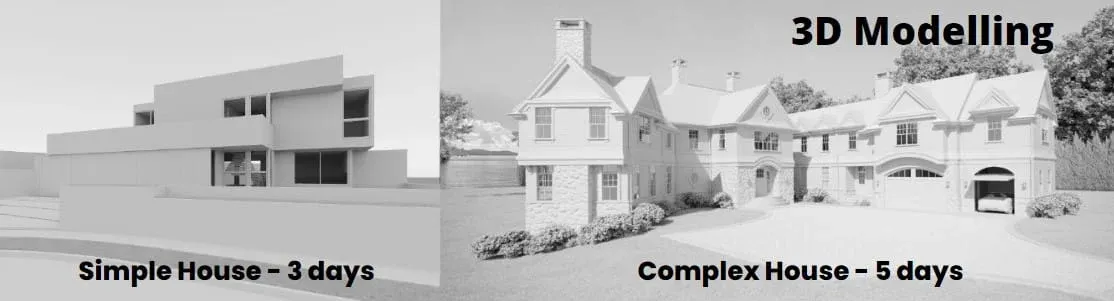
Understanding 3D rendering basics is essential to comprehend the timeline of a project. The creation of a 3D model is the first step, and the time it takes can vary significantly depending on the complexity of the project. A straightforward residential rendering can be modelled within 2–3 days, while a more intricate one can take up to a week to create a detailed 3D model.
2nd Step – Image Rendering
The next step is to choose the camera angle which will show the house in the 3D rendering, and then create images that are based on the previously created model. At this stage the model will look photorealistic as different materials and textures are added to the 3D elements, and the lighting is simulated in a way that matches the real world. This stage typically takes another 3–5 days depending on the complexity of the project.
As well as the above, there are a few other factors that can either speed up or slow down the process.
- If the project’s design is finalised, it’s quicker to move onto the phase of creating renderings. If the project design isn’t complete, the modelling phase takes more time as it requires a round of revisions to finalise the design.
- Batched comments are always better than fragmented ones, the rendering team incorporates them at once. Fragmented comments mean the revision process drags on and may incur extra rounds.
- Providing a 3D model is usually helpful as the rendering team doesn’t have to build a model from scratch. However, the quality of the 3D model is important as not all of them can be used directly by a 3D studio.
- Adding lifestyle elements such as people or creating special lighting effects (blue hour or dusk) creates extra work and extends the timeline, but also enhances the quality of the renderings.
- Some 3D companies offer the option of expediting the work, working longer hours or weekends for higher fees. A great option if time is of the essence, but always consult the company first to check availability.
- Increasing the amount of feedback can extend the timeline significantly. Technically the 3D process should not take more than 5–7 days, but if parts of the project need to be re-done multiple times due to comments, the whole process can take up to a few weeks.

Moreover, an understanding of the whole 3D process can save you time as it improves the quality of the collaboration with 3D rendering studios as well as maximizing their productivity. If you want to learn more about the 3D rendering process, check out our 3D Rendering Basics guide.