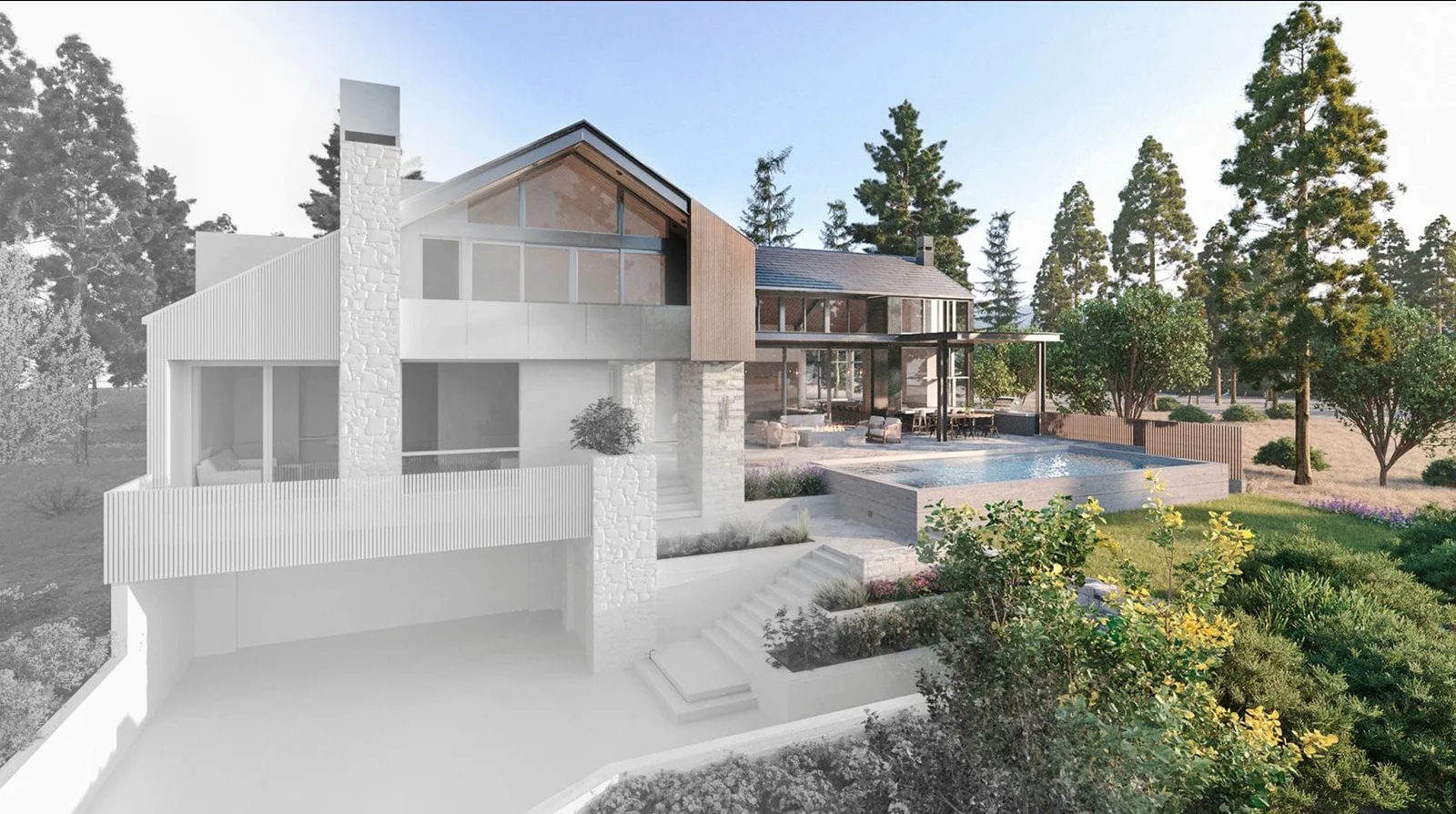
The world of the visualization industry is filled with terminologies and concepts that can often be confusing. Two such terms are 3D modeling and 3D rendering. Many people tend to use them interchangeably, which leads to further confusion regarding their differences and similarities.
This guide explores the intricacies of 3D rendering vs 3D modeling and explains how they complement each other.
Key Takeaways
- 3D Modeling vs. 3D Rendering: 3D modeling creates a three-dimensional digital representation of an object or scene; 3D rendering converts that 3D model into a 2D image or animation, often photorealistic.
- Output Differences: Modeling results in a 3D model usable for further rendering, 3D printing, or VR. Rendering produces a 2D image or animation for marketing or presentations.
- Technical Expertise: Modeling requires understanding of geometry and spatial relationships; rendering demands expertise in lighting, shading, and visual effects.
- Workflow Order: Modeling comes first, providing the foundation for rendering.
- Complementary Roles: The two are complementary processes that go hand in hand.
What Is 3D Rendering?
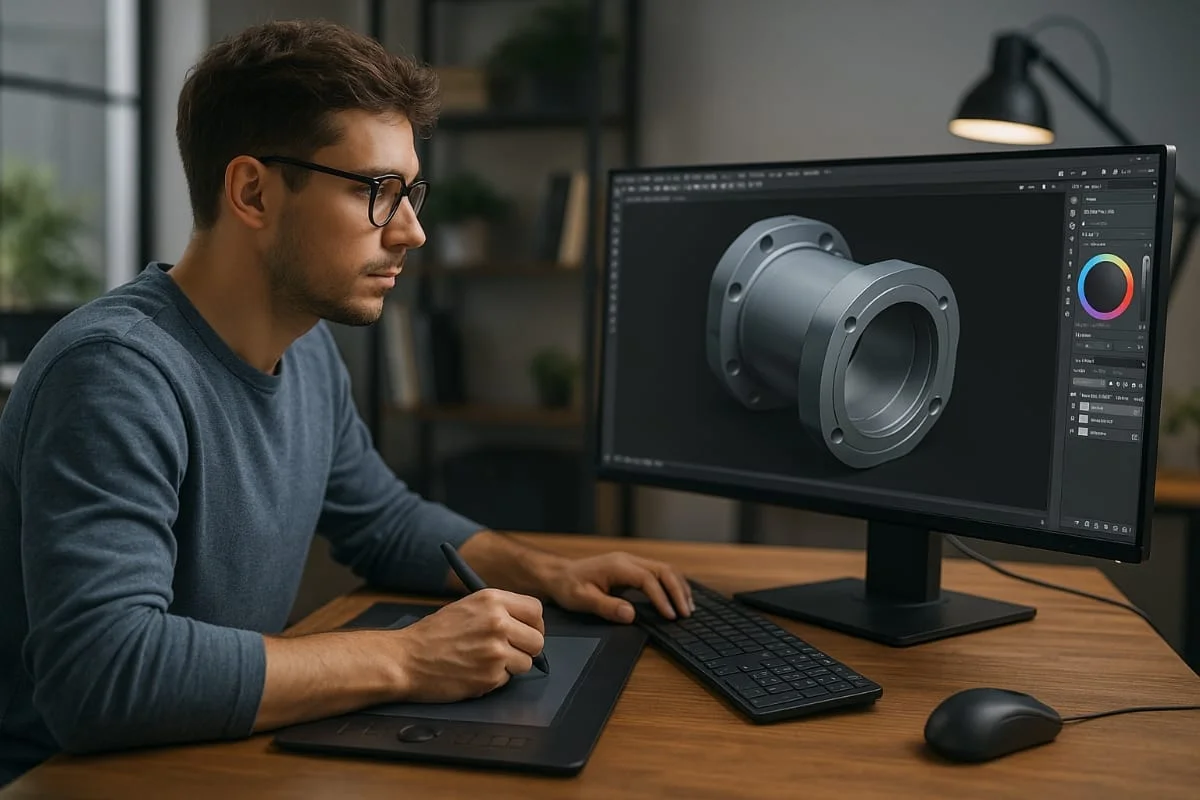
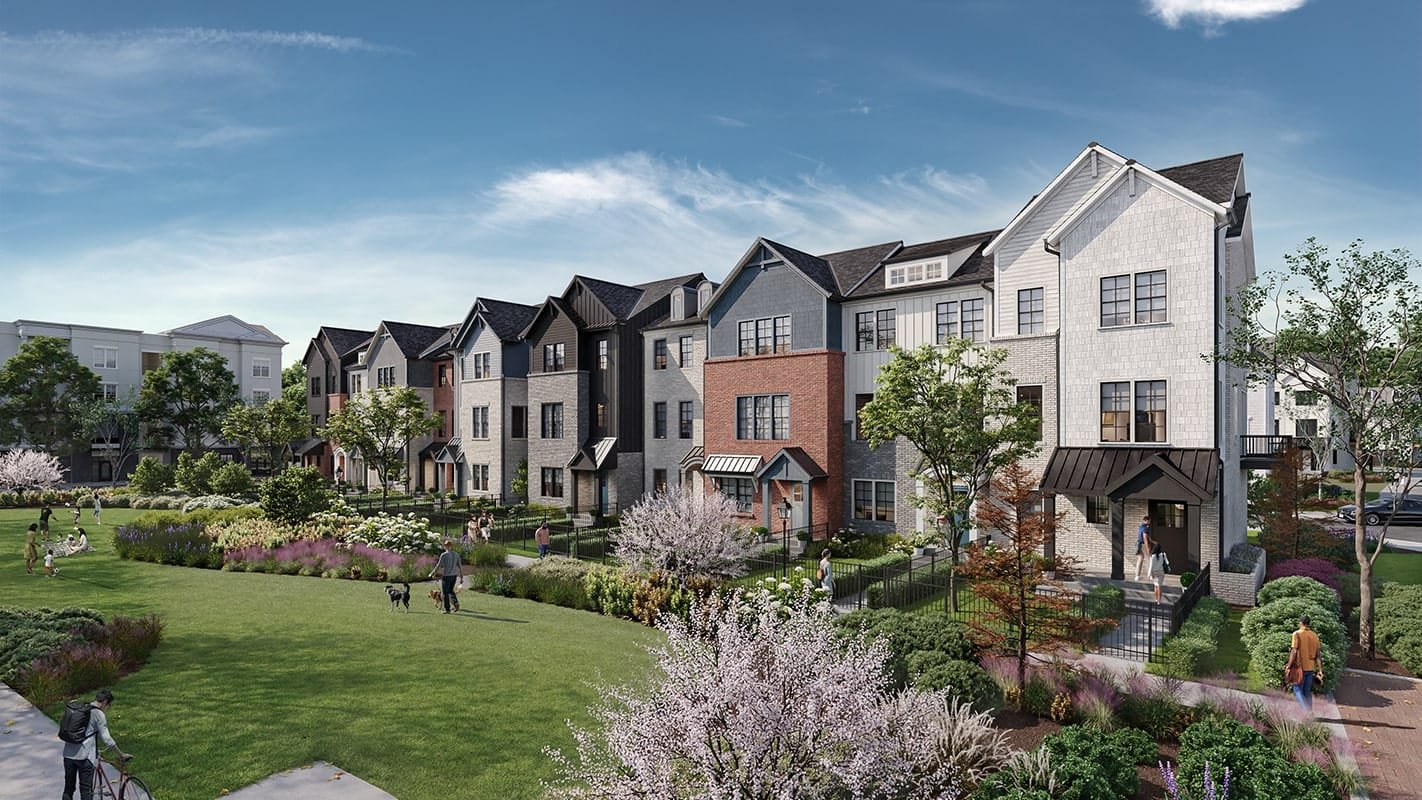
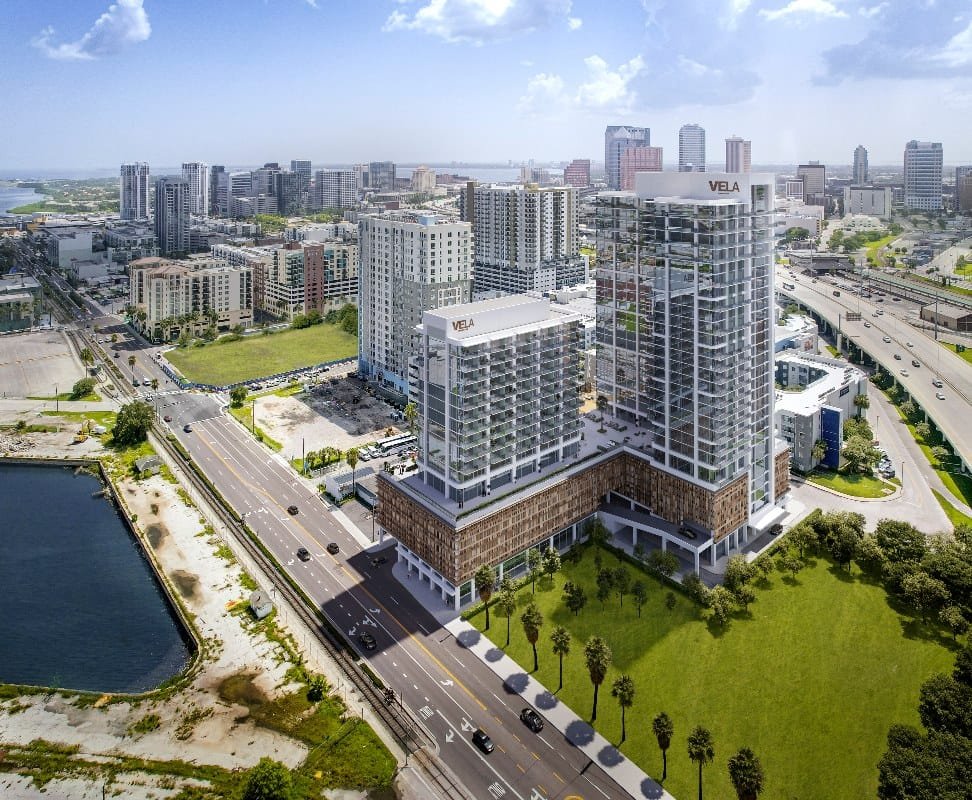
3D rendering is the process of creating a 2D image (often photorealistic) from a 3D model using specialized software. It’s used in architecture, interior design, engineering, video game development, and other fields.
The process involves taking a 3D model and applying lighting, shading, texture, and other visual effects. It uses complex algorithms that simulate the way light interacts with objects in the real world.
What Is 3D Modeling?
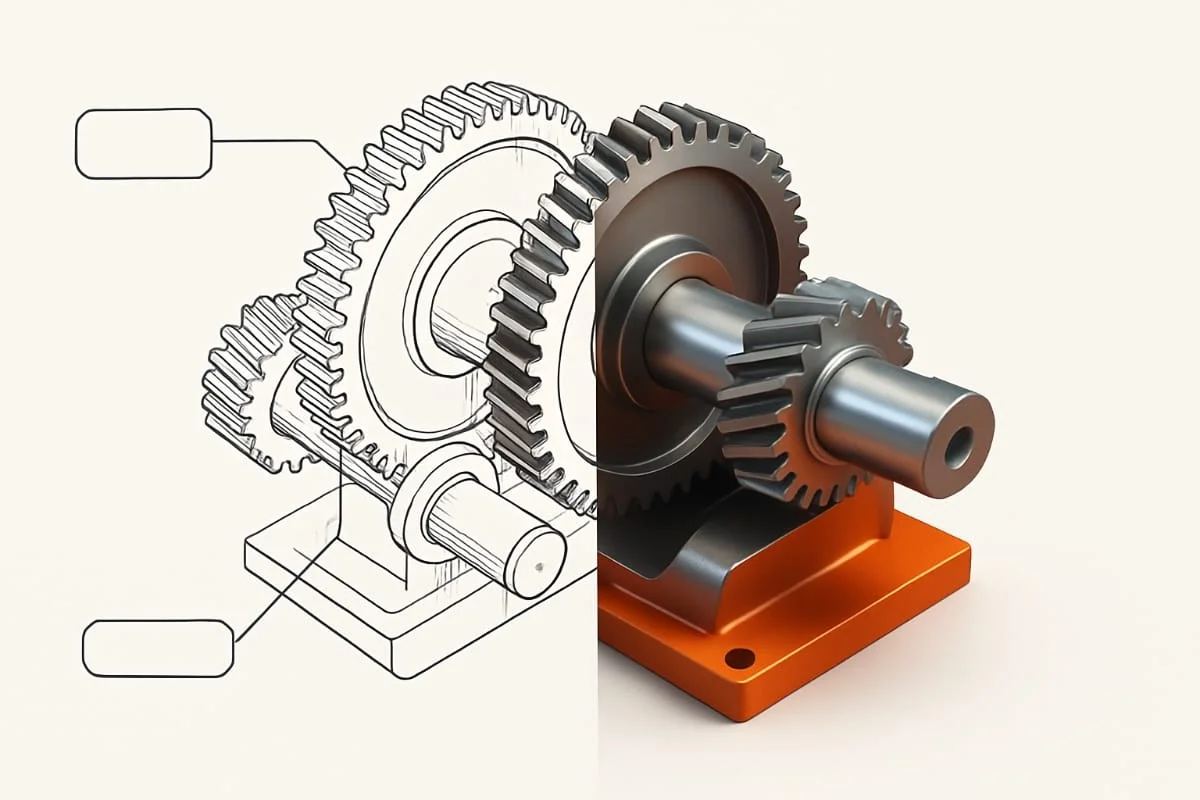
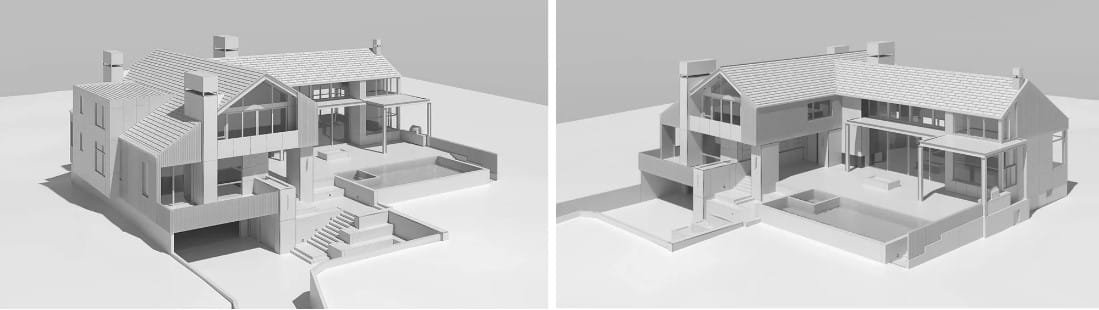
3D modeling is noticeably different from rendering. Rather than creating a 2D image, the final product is the model itself, which can then be used for other purposes such as 3D rendering.
The process involves creating a basic shape in 3D and refining it to create a more complex object. The software provides tools for manipulating shape, size, position, orientation, textures, colors, and other visual elements.
3D Modeling vs Rendering – Similarities
Software: Both Require Specialized Software
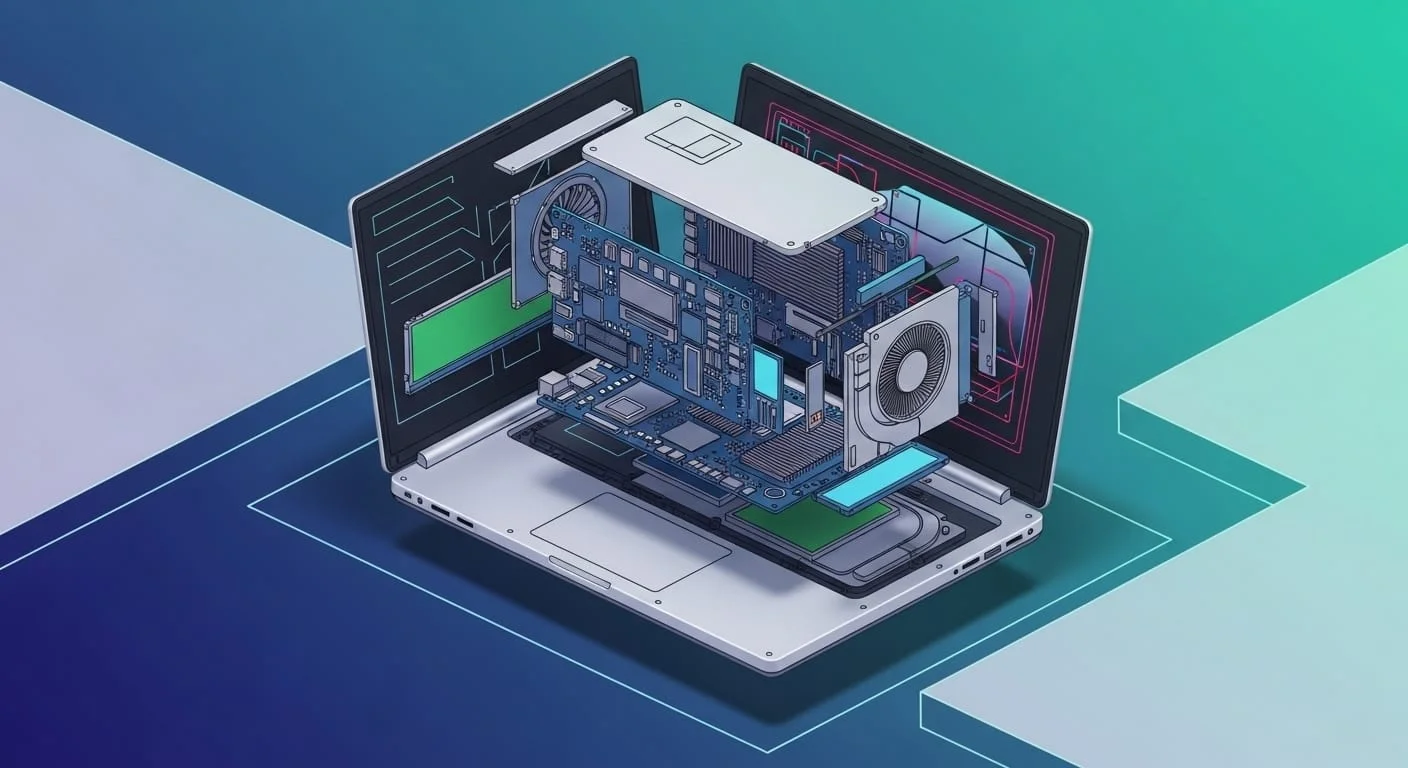
Both use similar software tools — Revit, SketchUp, Rhino, and 3ds Max for modeling; and a range of paid/free options for rendering that add lighting, shadows, textures, and visual effects. Some software (like 3ds Max) supports both.
Visualization: Both Contribute to Visualizations
Both are essential steps in the visualization process. Quality modeling is critical to achieving photorealistic results. 3D modeling is like the foundation of a house — strong foundations make for stable structures; quality modeling sets the stage for successful rendering.
Skills: Both Require Technical Expertise
Modeling requires understanding of 3D geometry, topology, and texturing. Rendering requires understanding of light and shadow, materials, and rendering software that can be highly technical.
Industry: Both are used in Creative Industries
Both are used in architecture, interior design, product design, video game development, and film/animation. In architecture, models are created for visualization, simulation, and analysis; rendering creates photorealistic images and animations for marketing and approvals.
3D Rendering vs 3D Modeling – The Differences
Difference in Output
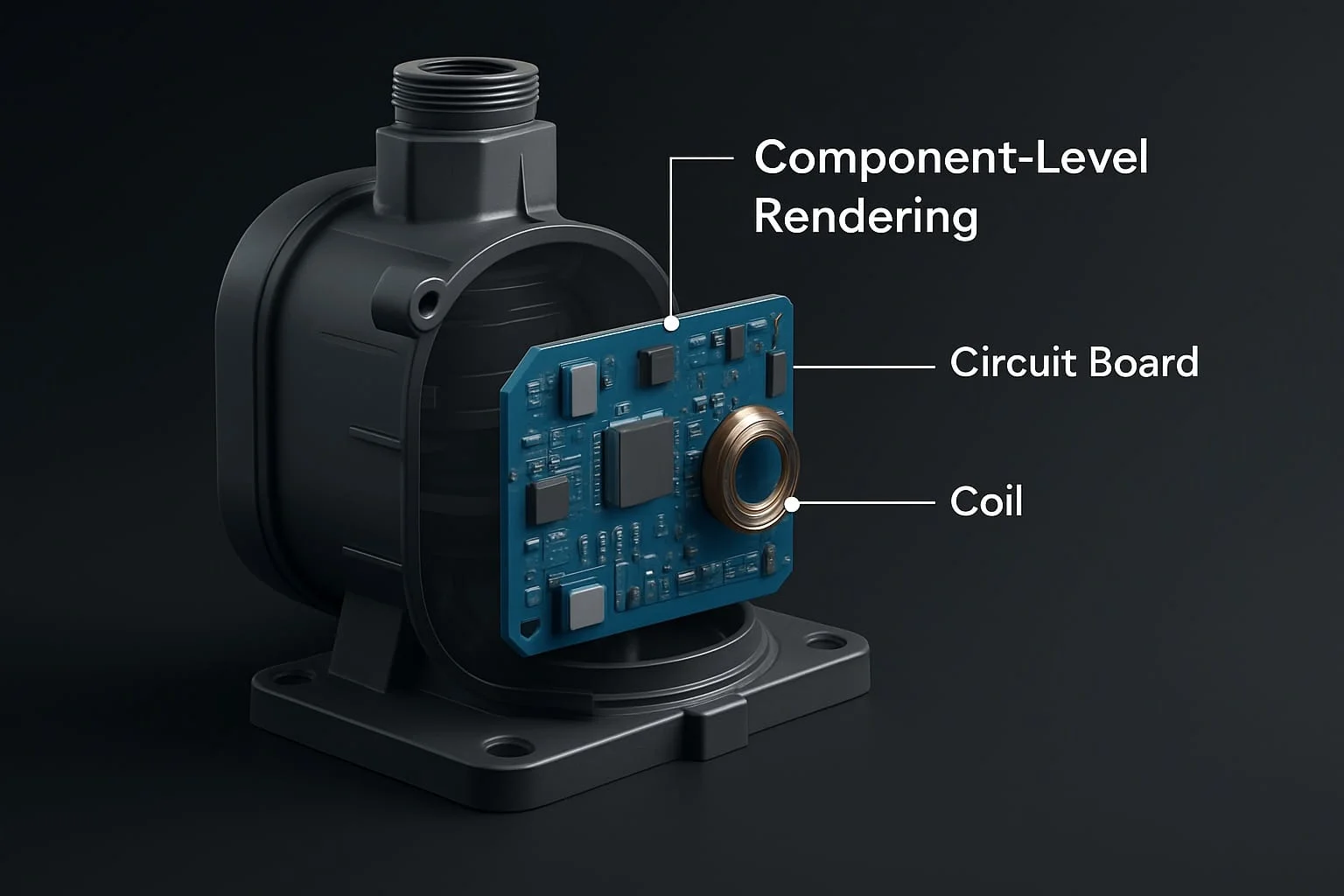
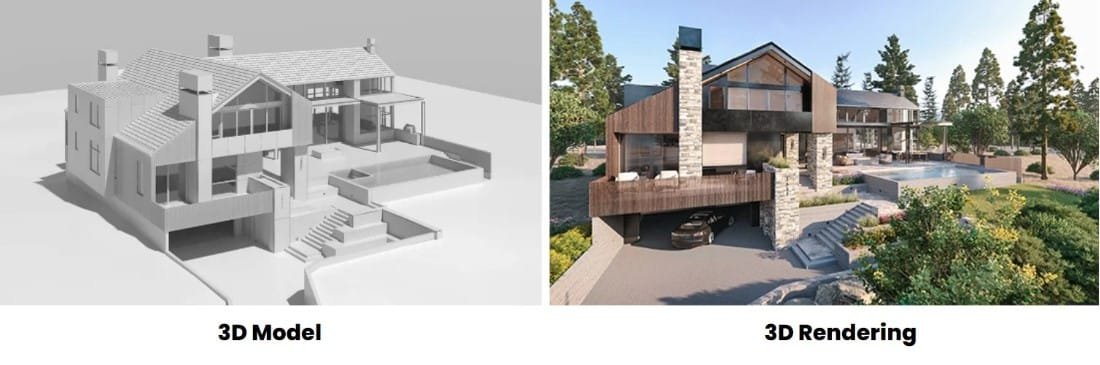
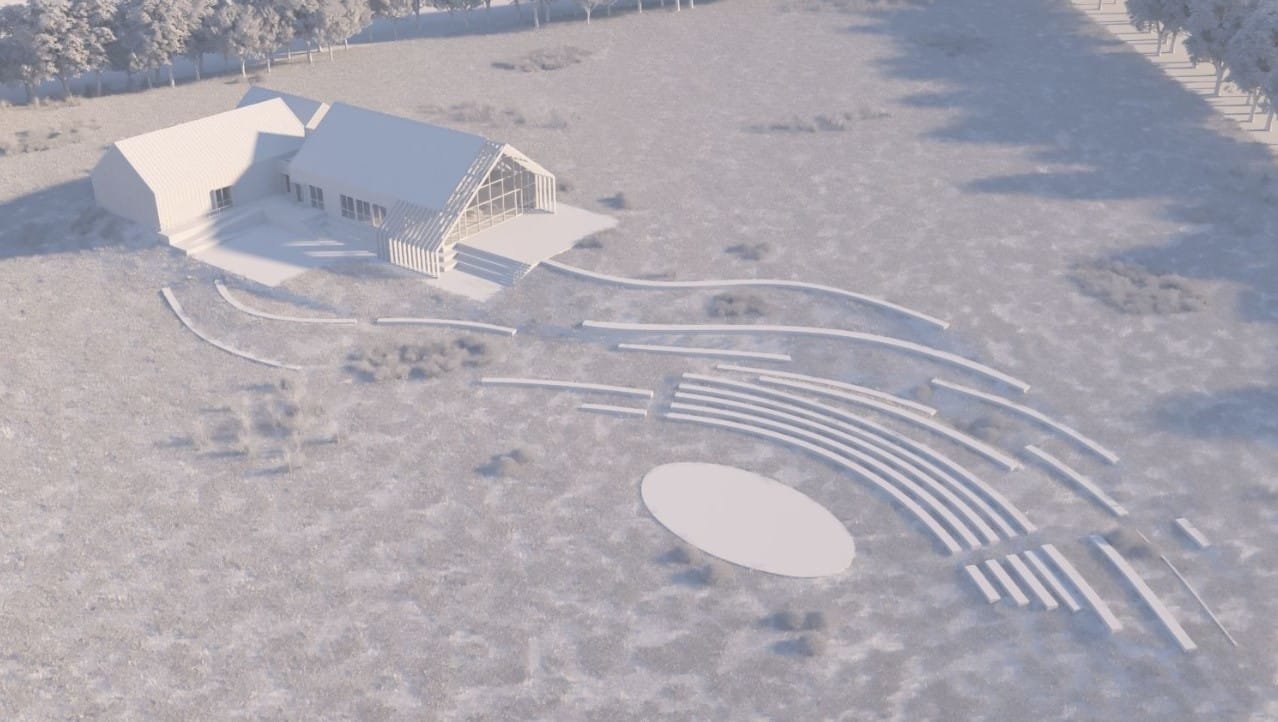
With modeling, the final result is the 3D model itself; with rendering, the result is a high-quality 2D image or animation. A model can be exported for 3D printing, animation, virtual reality, or further rendering. A render is for design development, marketing, advertising, and presentations.
Techniques Used
Skills Required for 3D Modeling:
- Understanding of geometry and spatial relationships
- Knowledge of 3D modeling software
- Ability to work with reference materials (photographs, sketches, blueprints)
- Attention to detail — small errors affect the final result
Skills Required for 3D Rendering:
- Understanding of lighting and materials
- Knowledge of rendering software and plugins (V-Ray, Corona)
- Time management with rendering times — optimize settings or use render farms
- Artistic touch — creating images that stand out
Order in the Workflow
Modeling typically precedes rendering and serves as the building blocks. In 3D rendering companies, different teams take care of each phase — 3D modelers create the model from CAD files or PDFs, then 3D artists handle the rendering phase.

How to Reuse a 3D Model with Different 3D Renders
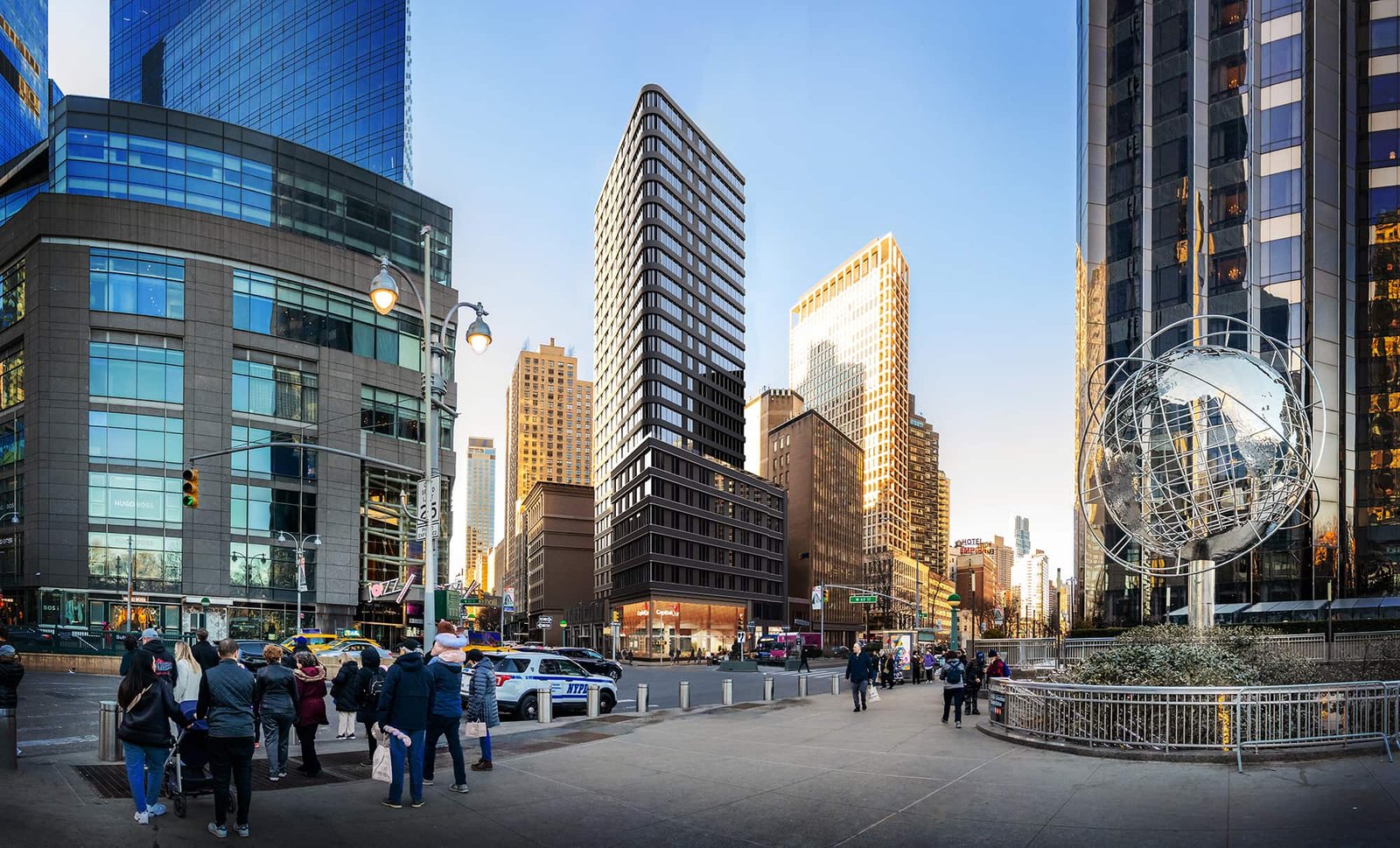
Once you have a 3D model of a house, you can reuse it to generate various renderings from different angles — front, rear, aerial. For interiors, a model of a living room can be used for images from different angles.
A 3D model can also be used to create other products related to a particular project — animations, virtual reality tours. Another way is to create a 3D library of reusable assets (furniture, vegetation, vehicles) to speed up modeling for future projects.
How to Simplify the 3D Modeling and 3D Rendering Processes
Use references like sketches, photographs, or blueprints to create accurate models and speed up the process. Use pre-made 3D assets — models, textures, materials — instead of creating everything from scratch.
Optimize software settings for performance, use render presets to speed up rendering, and gain experience to refine your workflow.
3D Rendering vs Modeling – Which One Should I Choose?
3D modeling is a good fit if you enjoy the technical and creative aspects of creating 3D models — design, architecture, product development, or game development.
3D rendering is a good fit if you enjoy creating photorealistic or stylized 3D images. If you have a more artistic side and like working on lighting, texture, and materials, rendering could be a better fit.
Both fields offer exciting career opportunities, and each requires a different set of skills. Strong skills in software are required for both.
FAQs
What is the difference between a 3D mesh and 3D model? A 3D model is a complete digital representation of an object or scene. A 3D mesh is the basic building block — a collection of vertices, edges, and faces that define the shape.
Can you start rendering without having 3D models? A 3D model serves as the foundation for rendering. Without one, only tasks like mood boards or storyboards can be done — high-quality renderings require a quality model.
Why should I invest in professional 3D modeling and rendering services? Professional services ensure that your project is visually compelling, accurate, and ready for presentations or marketing.
How do 3D rendering services enhance my architectural or design projects? They bring designs to life with photorealistic images that help clients visualize the final outcome, aid decision-making, and improve marketing.
What factors influence the cost of 3D rendering and modeling services? Complexity, level of detail, number of renderings, delivery timeline, and custom elements like unique textures or lighting.