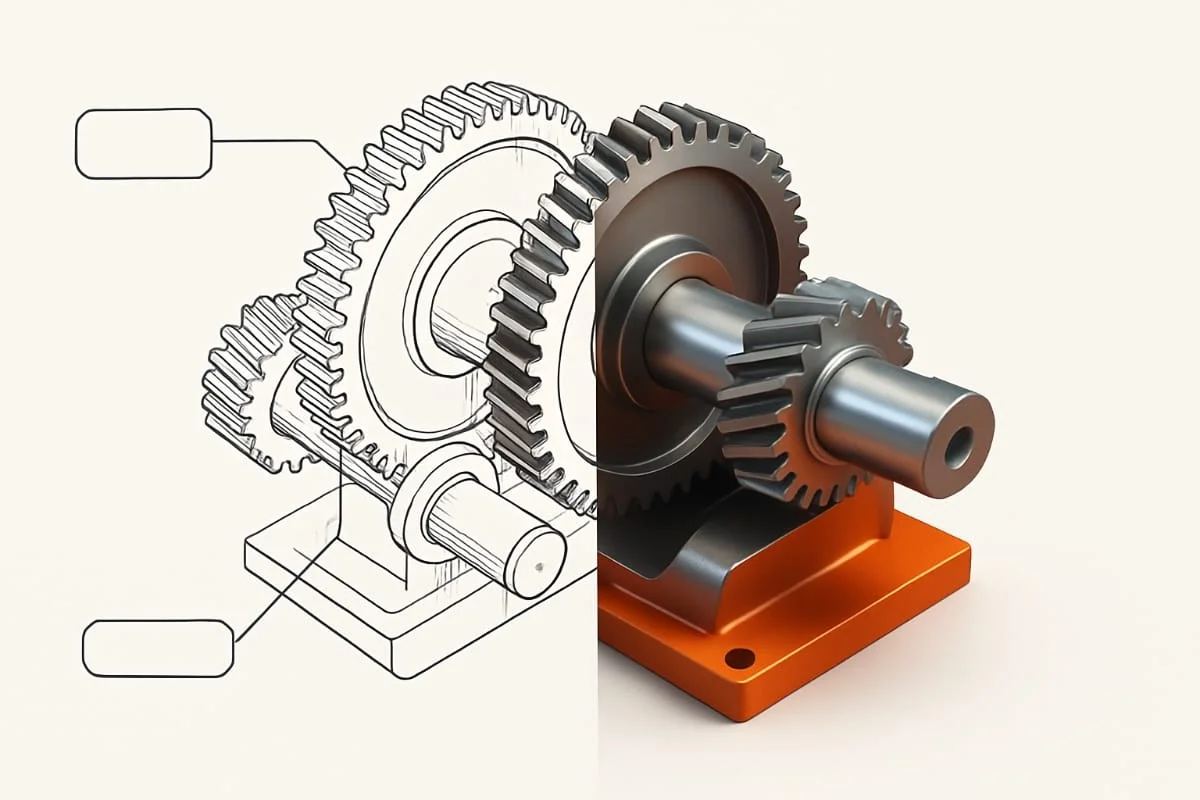
Even with 3D, AR, and motion dominating product storytelling, traditional technical illustrations remain core to information sharing in industries like manufacturing and aerospace. They simplify complex products into essential form and function with a clarity even photorealistic renders can’t match.
At No Triangle Studio, technical illustration is evolving — the most effective workflows combine illustration precision with 3D realism for communication that’s both instructive and engaging, visible across our product rendering services including exploded visualizations.
This article covers where technical illustration still shines, where 3D adds value, and why the best projects use both.
Key Takeaways
- Technical illustration remains vital for engineering, documentation, and compliance.
- It’s not a replacement game — 3D rendering and illustration work best together, pairing clarity with visual impact.
- Use illustrations for precision, 3D for realism, or combine them for maximum effect.
- Smart teams integrate rather than choose — hybrid visuals are becoming standard in product design, manufacturing, and B2B marketing.
What Is a Technical Illustration?
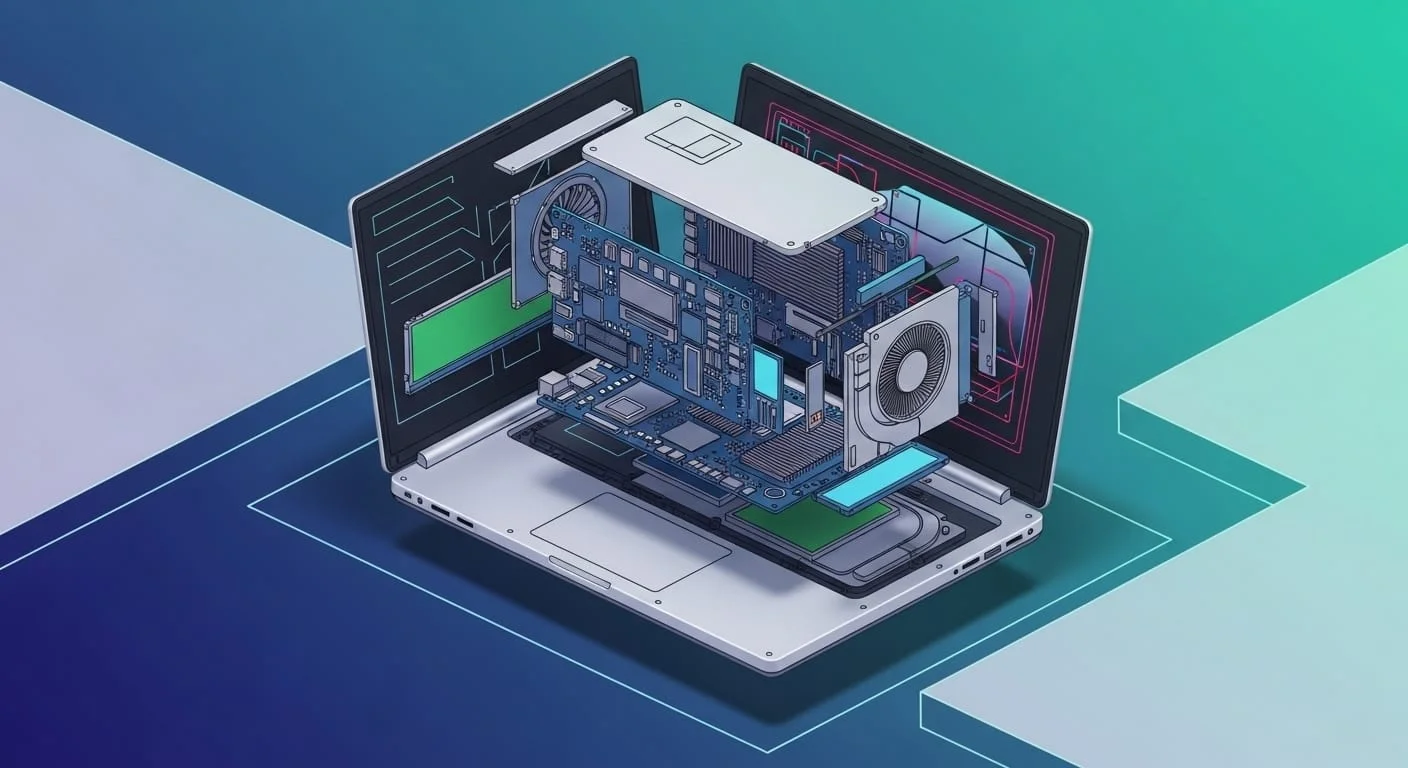
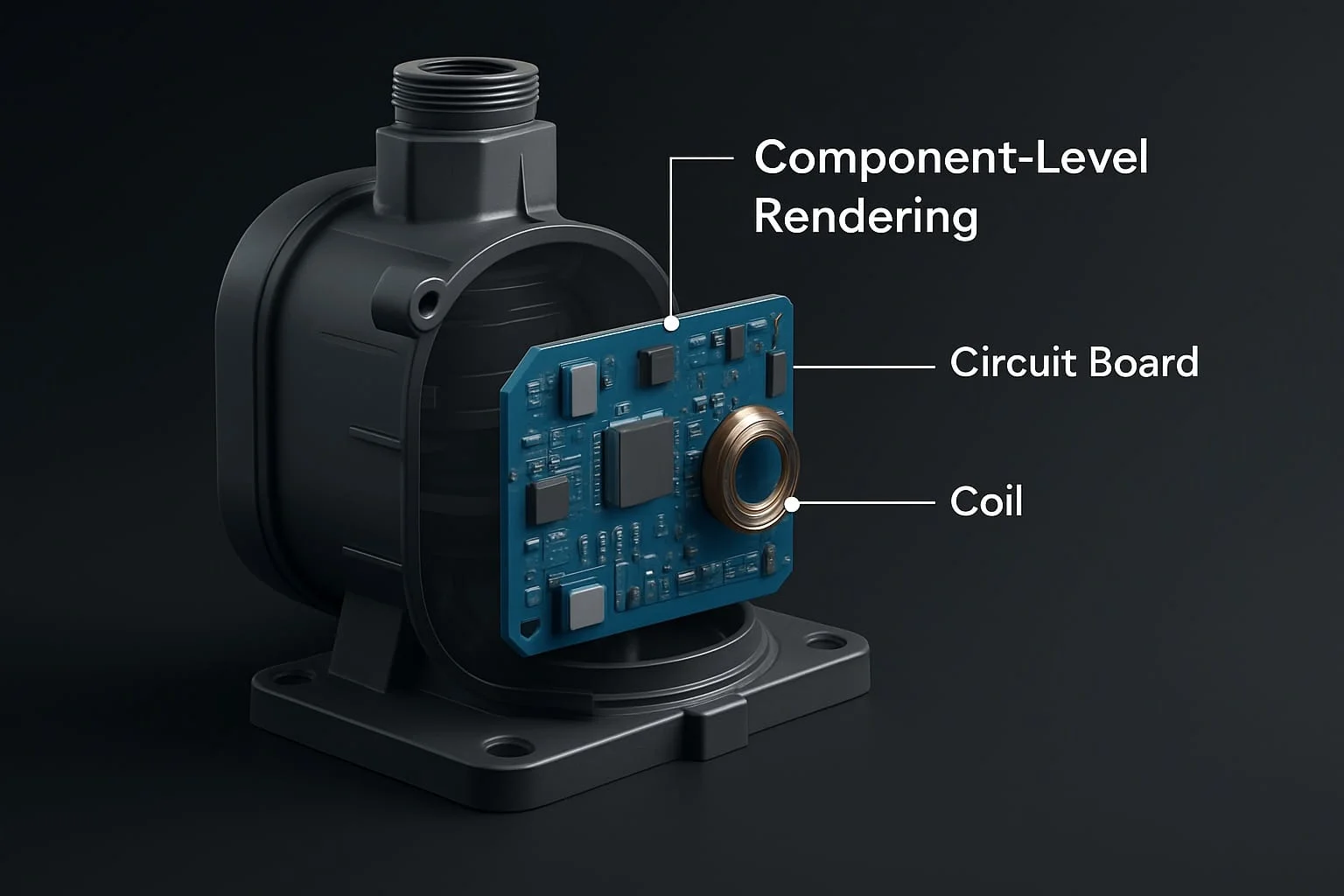
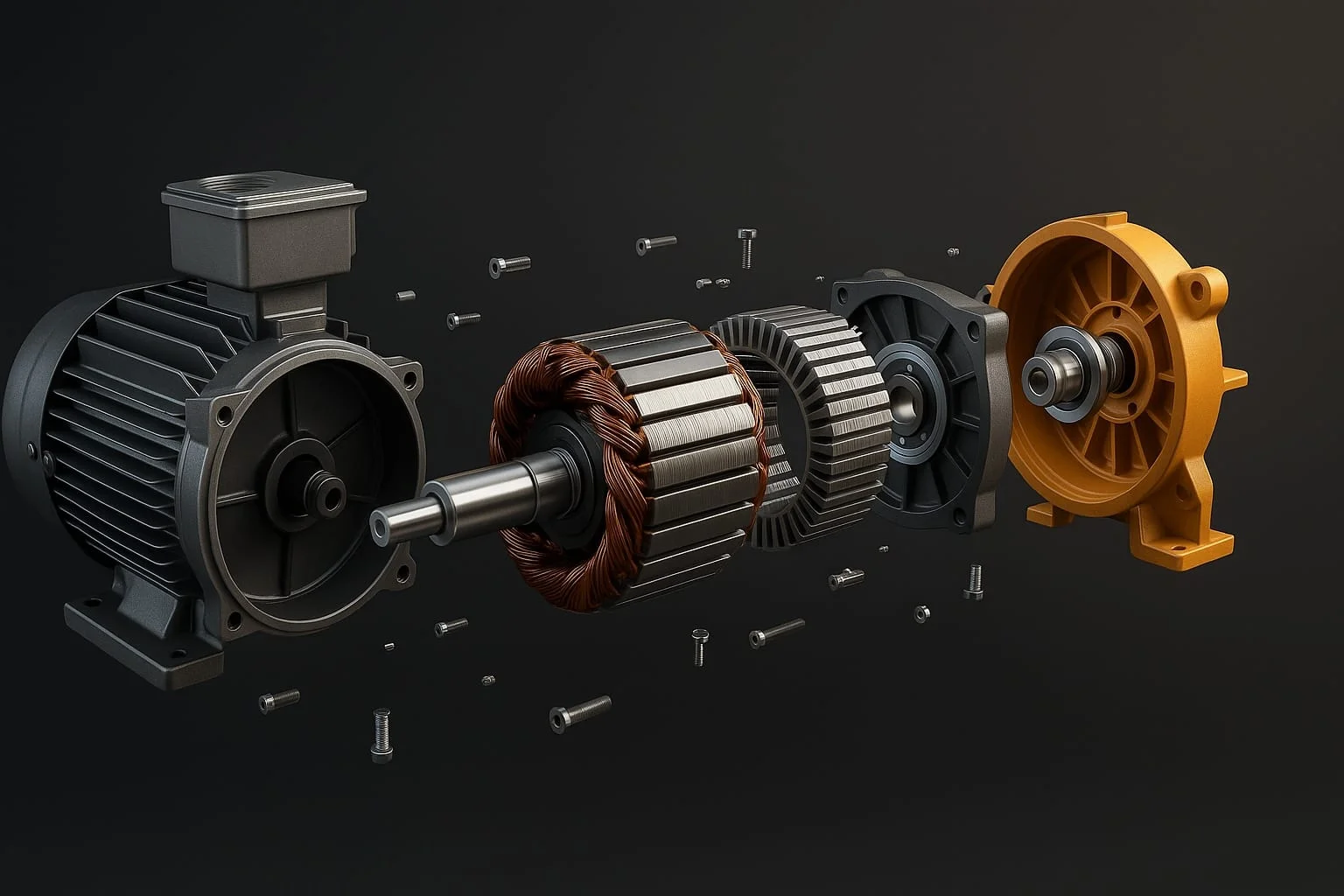
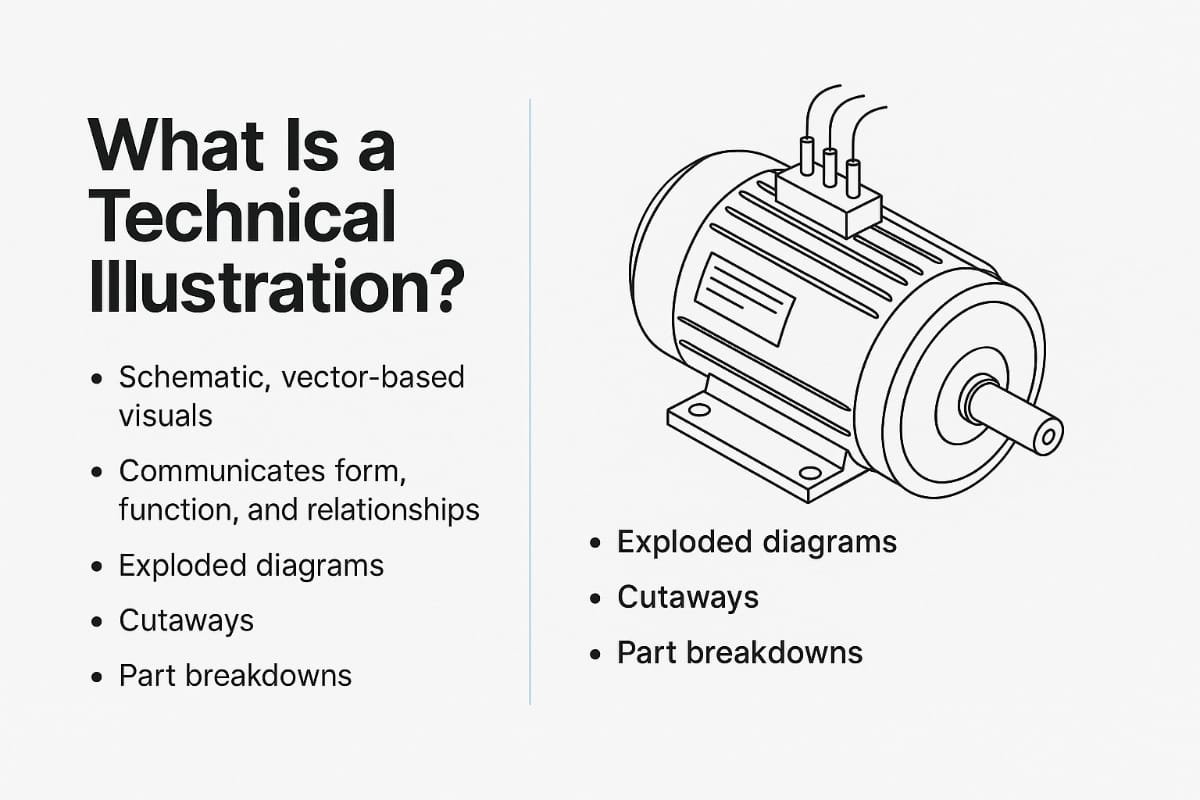
A technical illustration is a schematic visual that explains how something works, what it’s made of, or how it’s assembled — built to explain rather than sell. Typically vector-based and stripped of unnecessary detail, these diagrams serve engineering, product design, and documentation, commonly as exploded diagrams, cutaways, or part breakdowns with callouts.
Long used in instruction manuals and compliance documents, today they’re often generated or refined with 3D tools, then cleaned into crisp linework. They’re still the clearest communication method for aerospace, automotive, and industrial machinery projects.
For more on exploded views, see What Is an Exploded View Rendering?
Limitations of Traditional Illustration Alone
Illustrations have limits when used in isolation.
- Flat visual style — lacks depth and texture, helpful for clarity but lifeless for marketing.
- Manual precision required — unlike 3D’s any-angle generation, illustrations depend on artist accuracy, making updates slow.
- Not ideal for visual storytelling — built for understanding, not persuasion; lacks weight on product pages or investor decks.
This is why product design and B2B marketing teams now combine illustration with modern rendering workflows.
How 3D Rendering Enhances Technical Illustration
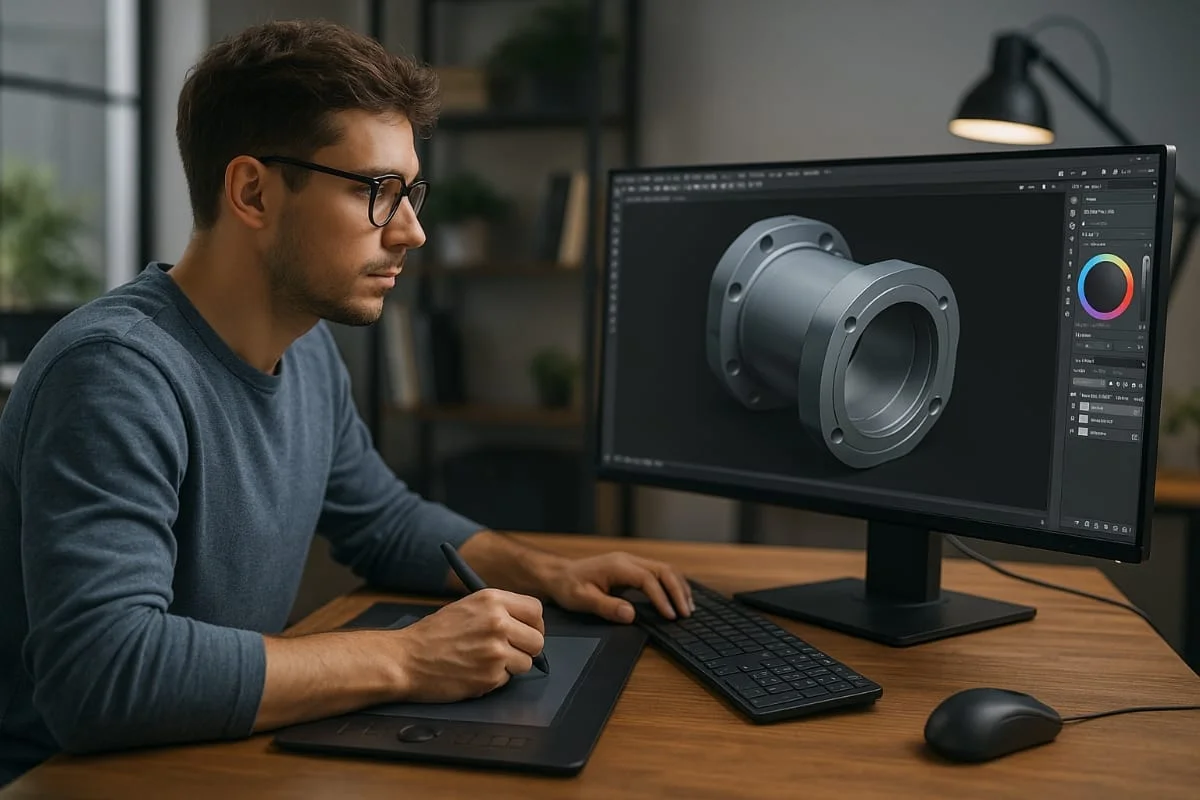
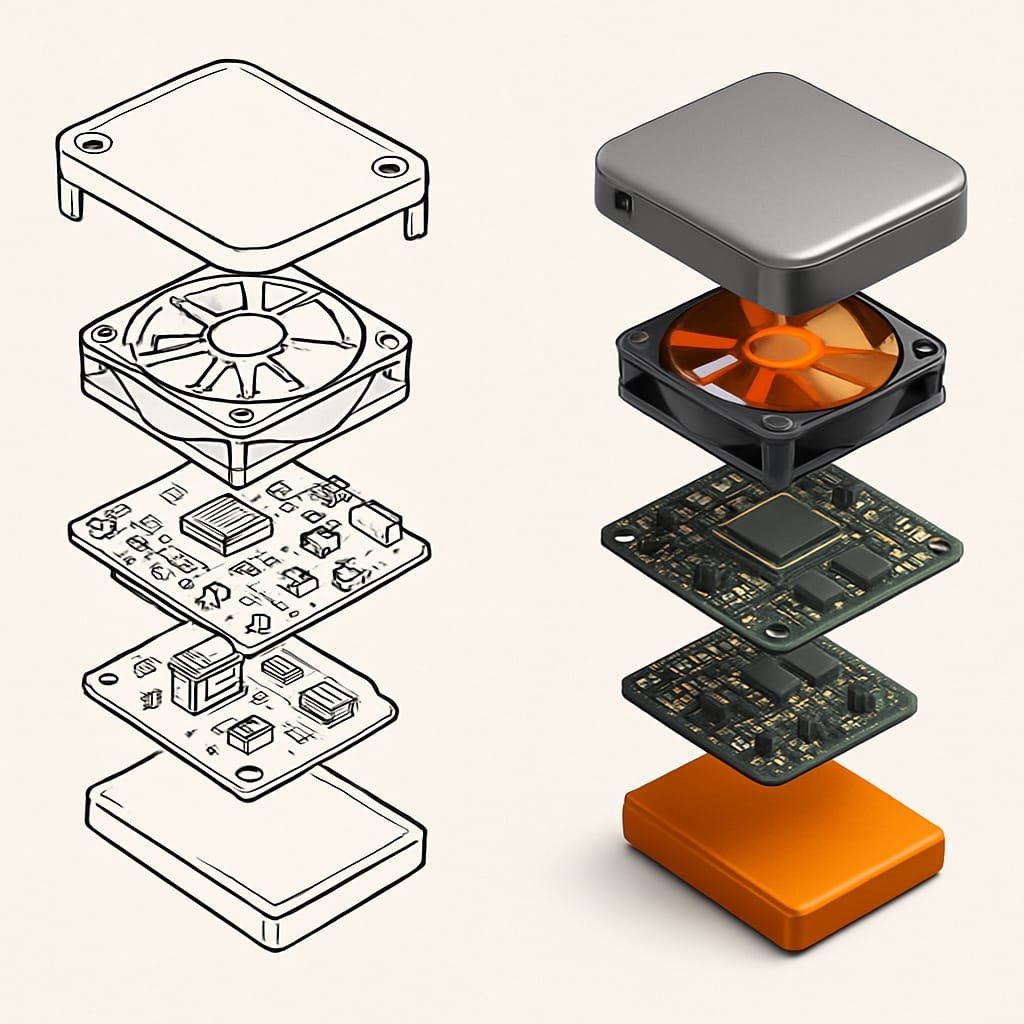
3D rendering strengthens rather than replaces illustration, yielding a faster, more versatile workflow.
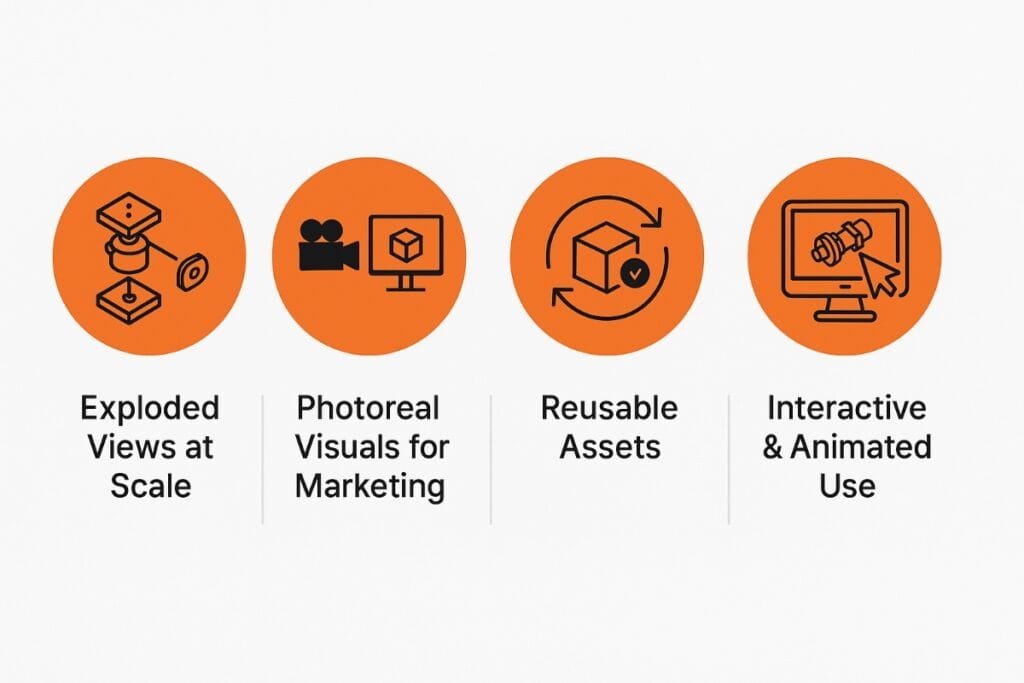
- Exploded views at scale — components can be precisely positioned, labeled, and reused across formats.
- Photoreal visuals for marketing — illustrations explain while renders sell; realistic materials and lighting resonate in sales collateral.
- Reusable assets — 3D models scale into animations, AR overlays, or simplified vector illustrations via Illustrator/SVG.
- Interactive & animated use — 3D illustrations animate well in manuals, apps, onboarding, troubleshooting, and training.
Used together, layered strengths beat picking one.
When to Use Both Together
The most effective product visuals use illustration and 3D side by side.
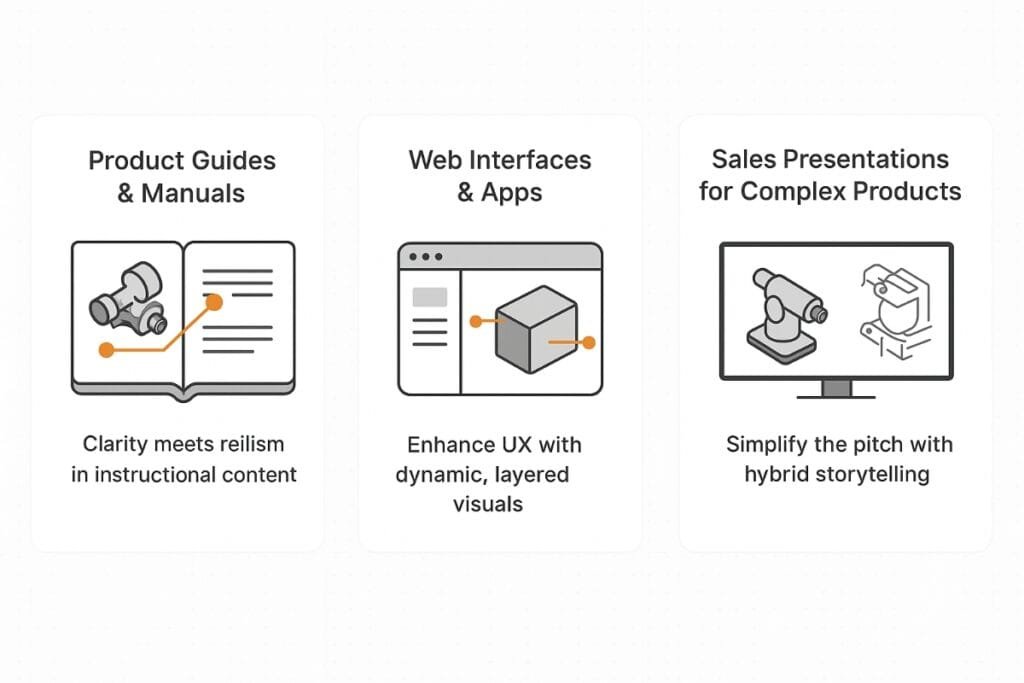
- Product guides & manuals — photoreal 3D plus callouts and overlays for parts and steps.
- Web interfaces & apps — configurators and support portals benefit from 3D renders with vector/SVG labels.
- Sales presentations for complex products — industrial, medical, hardware teams need both function and form shown, bridging technical and non-technical audiences.
No Triangle Studio often starts with a core 3D model and extends to both marketing visuals and simplified line art. Our blog on visualizing components explores hero shots blended with detailed schematics.
Conclusion: Clarity Isn’t Outdated — It’s Evolving
Technical illustration is a foundation, not a relic; still essential where accuracy, compliance, and step-by-step understanding matter.
Pairing it with modern 3D creates content that is both clear and engaging — know when to use which (or both).
No Triangle Studio works with product teams, engineers, and marketers to make complex stories visual via 3D product rendering services including exploded views built to inform and sell.
FAQs
Is technical illustration still relevant in 2025? Yes — while 3D dominates marketing and design, technical illustrations remain essential for clarity, compliance, and internal documentation, especially in precision-critical industries.
Do I need both technical illustrations and 3D renderings? Often, yes. Illustrations provide structure and clarity; 3D adds realism and emotional impact. Together they cover both functional needs (manuals) and promotional ones (investor decks).
Can you create vector illustrations from 3D models? Yes. 3D models are frequently used as the base to generate linework for SVGs or Illustrator-ready diagrams — a hybrid that stays accurate and scalable.
What industries benefit most from technical illustration services? Manufacturing, automotive, medical, industrial equipment, and electronics — any product that needs to be assembled, maintained, or explained.