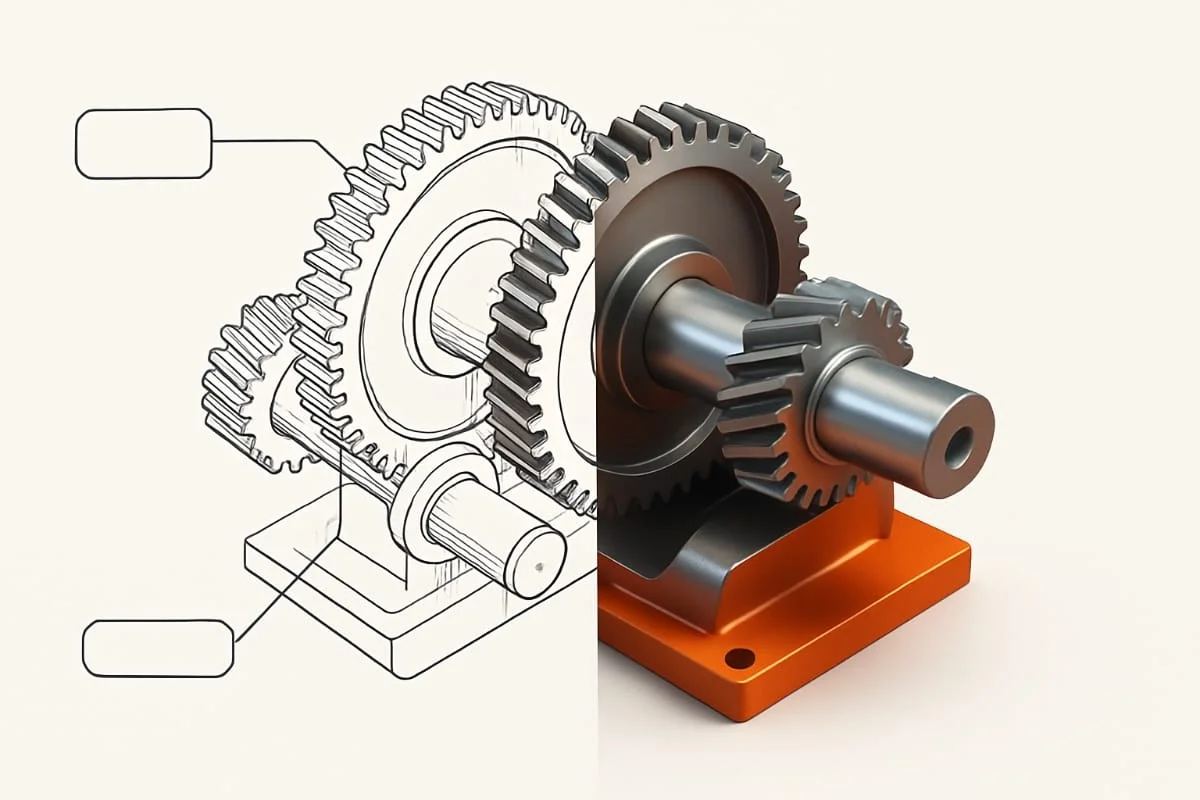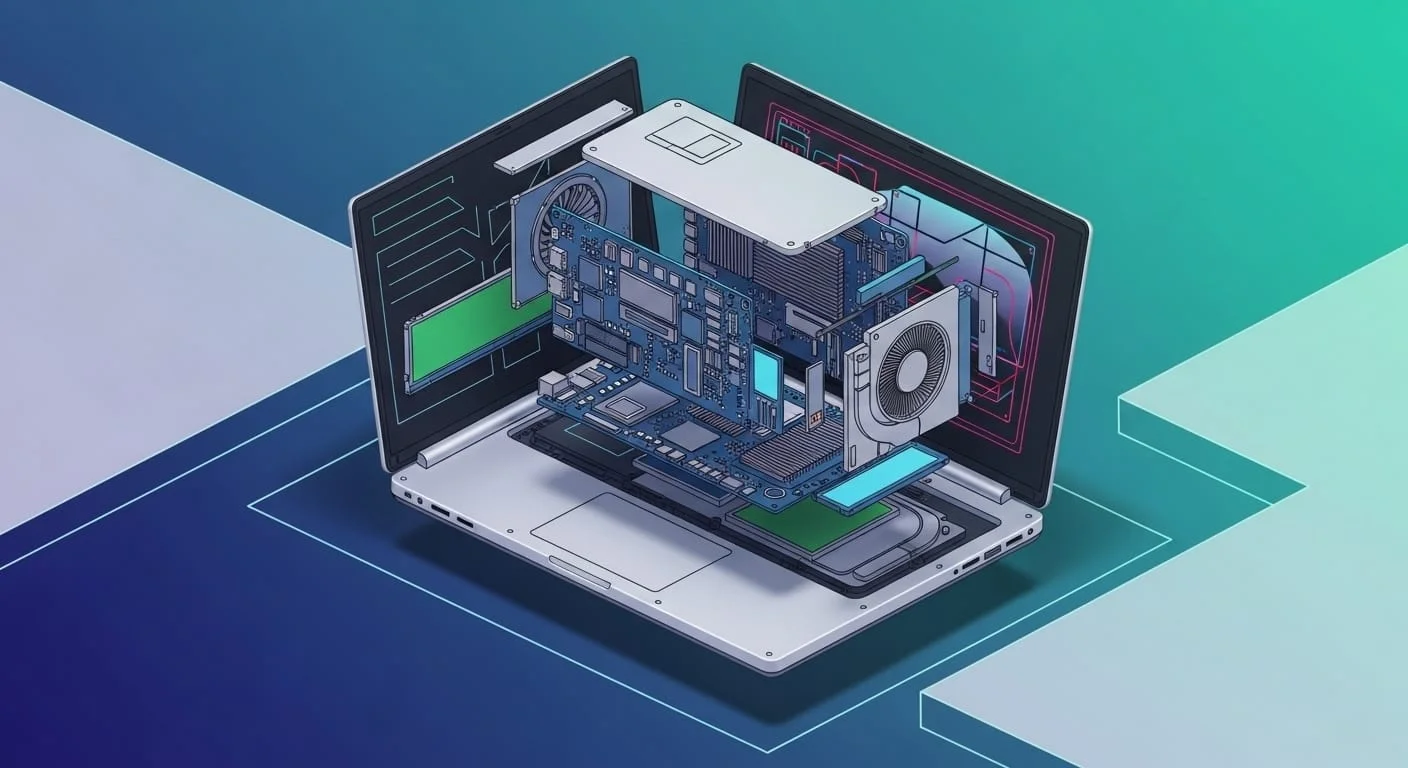
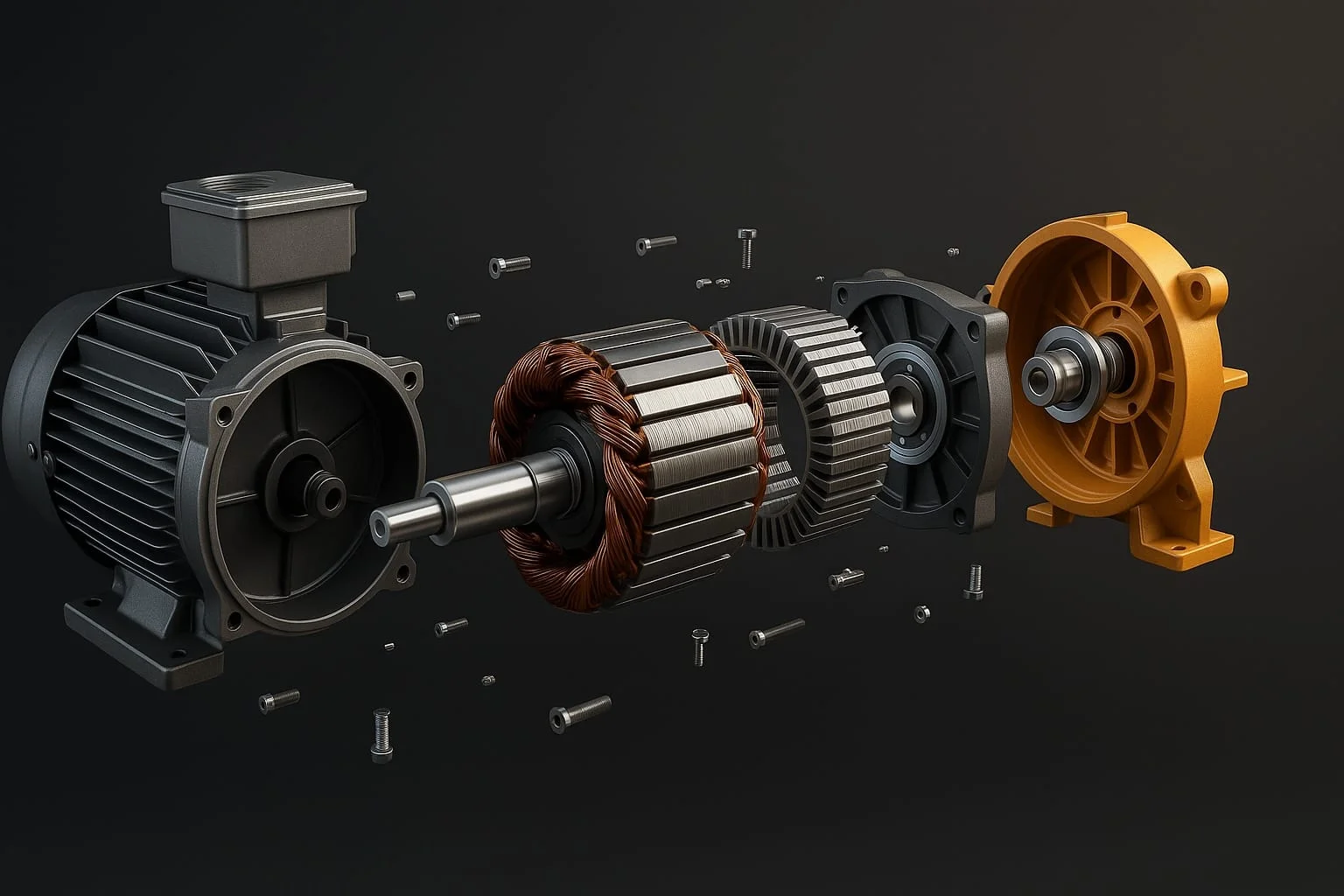
Exploded view renderings break a product into its individual components while keeping structure and scale intact, revealing how parts interact without overwhelming viewers.
NoTriangle Studio creates machinery exploded view renderings that are both technical and persuasive — helping engineers validate designs, manufacturers assemble, and marketing teams sell.
For a foundational primer, see our guide on what exploded views are; this article focuses on why exploded views are indispensable for machinery and industrial design.
Key Takeaways
- Exploded renderings help visualize internal components clearly.
- They’re ideal for manuals, training, compliance, and sales.
- Mechanical designers use them to validate layouts and fit.
- They reduce confusion for clients and technicians alike.
The Unique Challenges of Industrial Product Communication
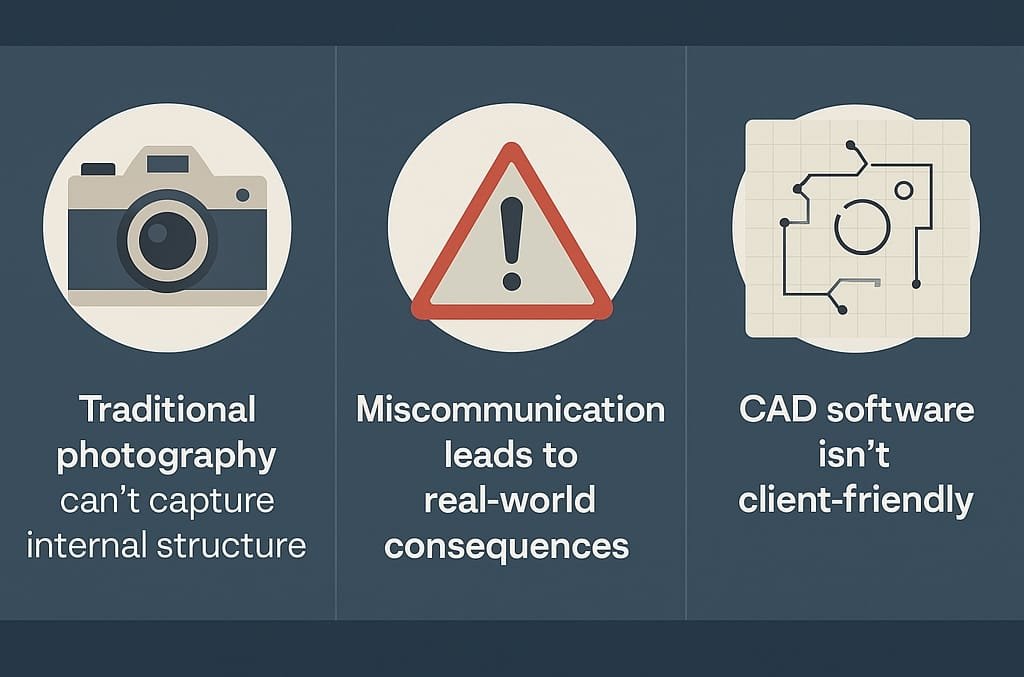
Industrial products contain complex internals (multi-part enclosures, gear systems) that are hard to communicate clearly. Traditional photography only captures the exterior — clients need to understand how a product works, not just how it looks.
Miscommunication causes wasted time, improper installation, and product returns. CAD software isn’t client-friendly: procurement, sales, and marketing stakeholders lack the tools or skills to read engineering models.
”An exploded view can help the reader quickly understand the outer and inner workings of a design, quickly identify the assembly or disassembly procedure or quickly identify a component in the assembly that may not be visible otherwise.” — Scott Morris, PLM Platform Manager at Peloton.
Exploded view renderings shine here because they’re detailed, precise, and intuitive even for non-technical viewers.
Where Exploded Views Fit in the Product Lifecycle
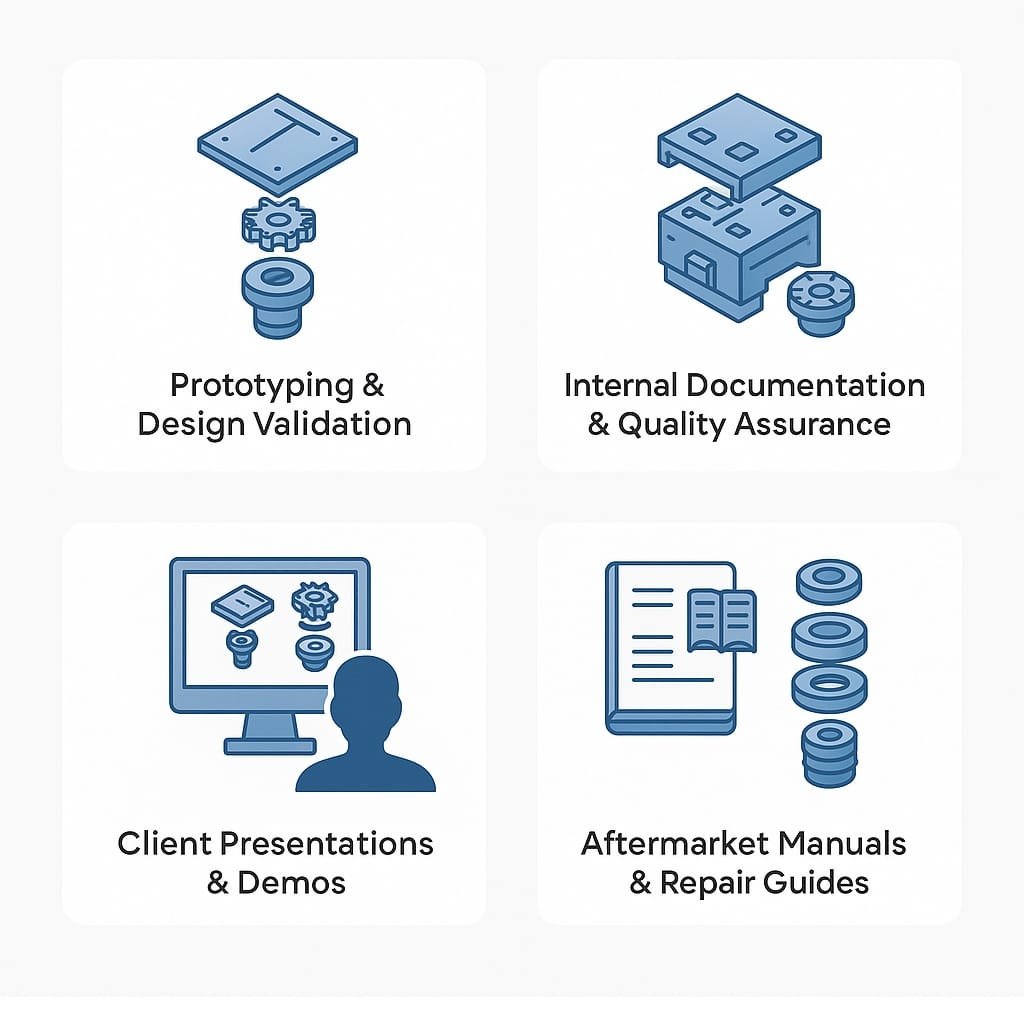
Exploded views support every stage of a product’s journey, from prototyping to post-sale support.
Prototyping & Design Validation
Engineers and industrial designers use exploded views to check component fit, spatial conflicts, and assembly sequences before production — bridging CAD models and manufacturing. See also our guide on reducing time to market with 3D rendering. Clear renderings also help QA teams and assembly workers follow correct procedures, reducing field errors.
Client Presentations & Demos
Exploded view renderings showcase a product’s depth and innovation to investors and clients without raw technical files — a clean way to communicate value fast.
Aftermarket Manuals & Repair Guides
Exploded views fit naturally into manuals where end users or technicians replace components or perform maintenance, offering clarity without engineering background.
From early development through in-market support, machinery exploded view renderings communicate function, structure, and value.
Why Photorealism Matters in Industrial Sales
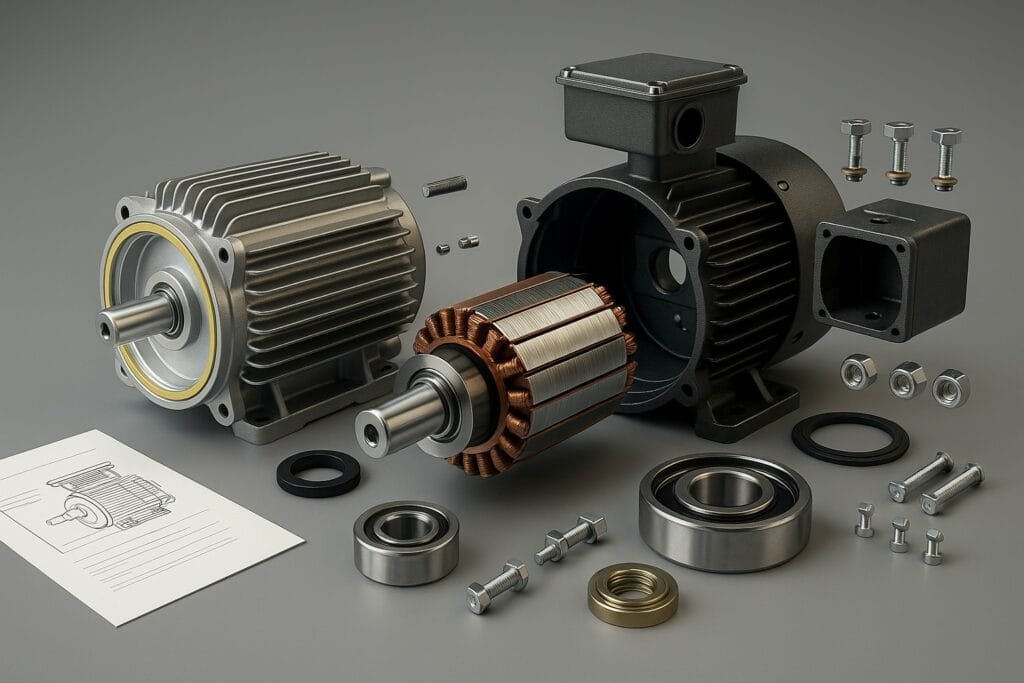
Photoreal rendering isn’t only for consumer products; in industrial contexts, realism builds trust for high-value machinery and components.
Show Materials and Build Quality
Photorealism clearly communicates finishes, coatings, and textures (brushed steel, powder-coated aluminum, medical-grade polymers) — functional selling points tied to durability and compliance.
Reinforce Product Integrity
Photoreal exploded views show not just how a product is built but why it’s worth investing in.
Win Over Non-Technical Buyers
Procurement teams and investors respond to clarity. A clean, well-lit exploded rendering with labels builds confidence, especially paired with spec sheets. NoTriangle Studio bridges technical design with compelling presentation via professional 3D rendering services for industrial teams.
Case Examples: Industrial Exploded Views in Action
Real-world scenarios show the versatility and value of machinery exploded view renderings.
Manufacturing Equipment
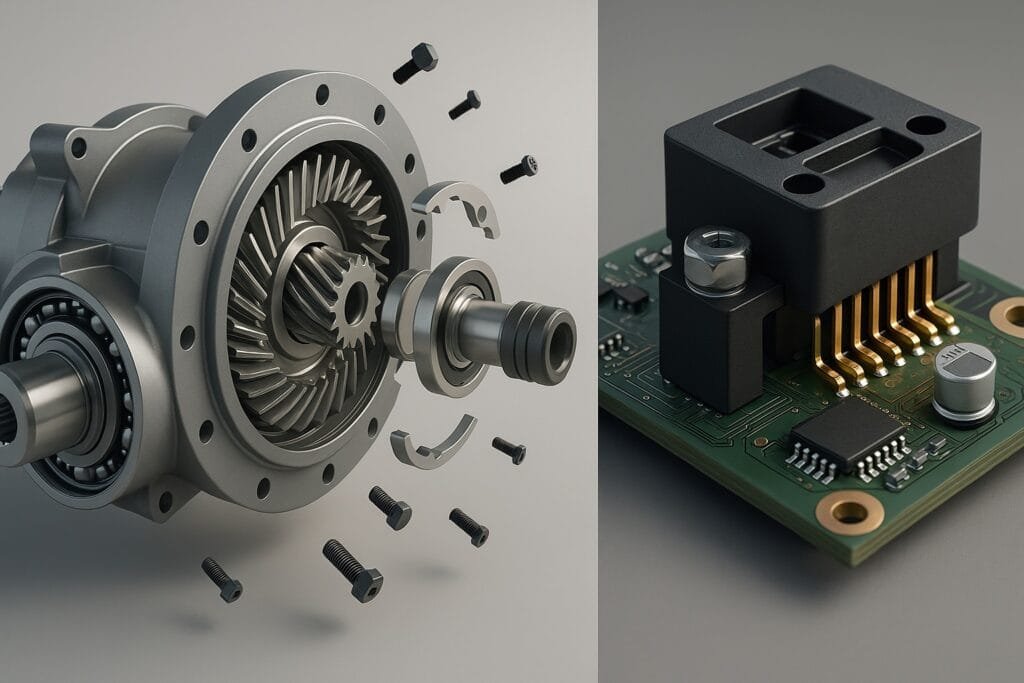
In heavy industry, exploded views illustrate large machine assembly — drive systems, control units, base plates, housings — for training, sales brochures, and safety documentation.
HVAC Systems
HVAC units contain multiple ducts, sensors, fans, and control modules; photoreal exploded views explain airflow, access panels, and internal layouts for installation manuals and maintenance training.
Electronics Enclosures
For ruggedized electronics, server racks, and handheld industrial devices, exploded renderings show gaskets, thermal shielding, button membranes, and connectors — proving build quality and integration.
These visuals are practical communication tools; in complex sectors, clarity differentiates a good idea from a successful product.
Pairing Exploded Views with Component-Level Visualization
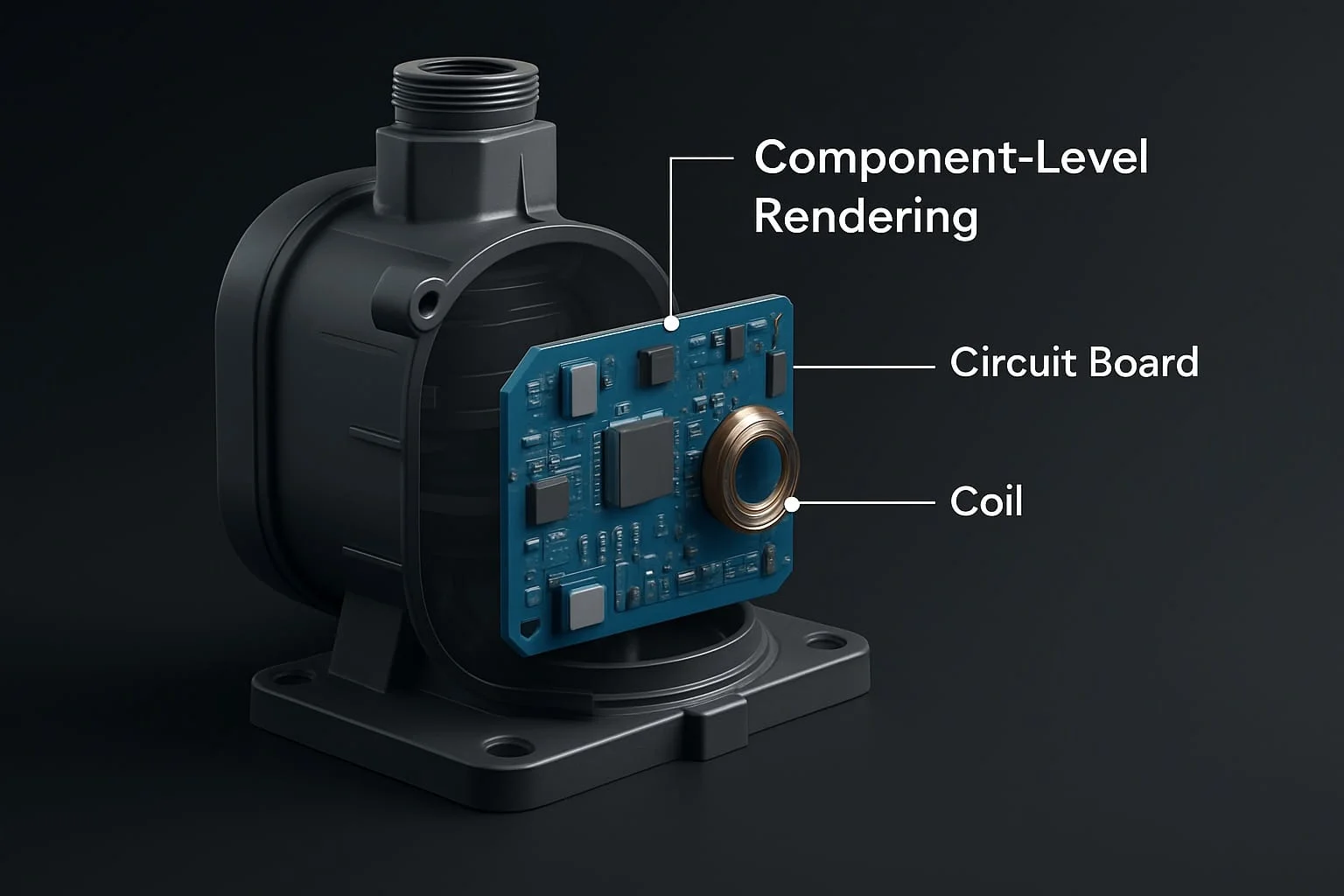
Exploded views show whole-machine assembly; sometimes you need to zoom further into a gear housing, control board, or valve mechanism via component-level visualization.
When to Zoom In
- To highlight mission-critical parts that require certification or maintenance.
- To isolate frequently replaced components for service manuals.
- To explain performance advantages or engineering innovations to buyers.
Combining macro (exploded views) and micro (component visuals) creates a flexible communication toolkit.
Conclusion: Clarity That Powers Performance
For industrial teams, exploded view renderings are communication power tools — for explaining assembly, pitching investors, or guiding QA workflows.
In machinery and industrial design, complexity is unavoidable, but confusion isn’t; visualizing internal logic turns complicated systems into compelling stories.
NoTriangle Studio translates detailed CAD data into clean, impactful visuals blending photorealism with structural insight. Start with our foundational guide or explore our professional 3D rendering services.
FAQs
Can exploded views be used for training manuals? Yes. Exploded view renderings are widely used in step-by-step training guides to show how machinery should be assembled, disassembled, or maintained. They simplify complex sequences and reduce error rates on the shop floor.
What file formats are available for industrial renderings? We can deliver high-resolution still images (JPG, PNG), vector-based assets (SVG), interactive 3D formats (USDZ, GLB), or animation files (MP4). The format depends on how and where you’ll use the asset — web, print, AR, or video.
Are these renderings suitable for engineering review? Absolutely. While not a substitute for formal CAD validation, exploded renderings help teams review spacing, fit, and part relationships in a more intuitive format — especially useful in cross-functional meetings.
How long does it take to render complex mechanical assemblies? Turnaround depends on complexity, detail, and format. For most industrial products, expect 1–3 weeks from project kickoff to delivery — faster if CAD files are clean and reference materials are ready.
Can you make these part of a larger product rendering strategy? Absolutely. Exploded isometrics often work best when they’re part of a wider system of visuals — hero shots, technical breakdowns, and interactive assets all working together.